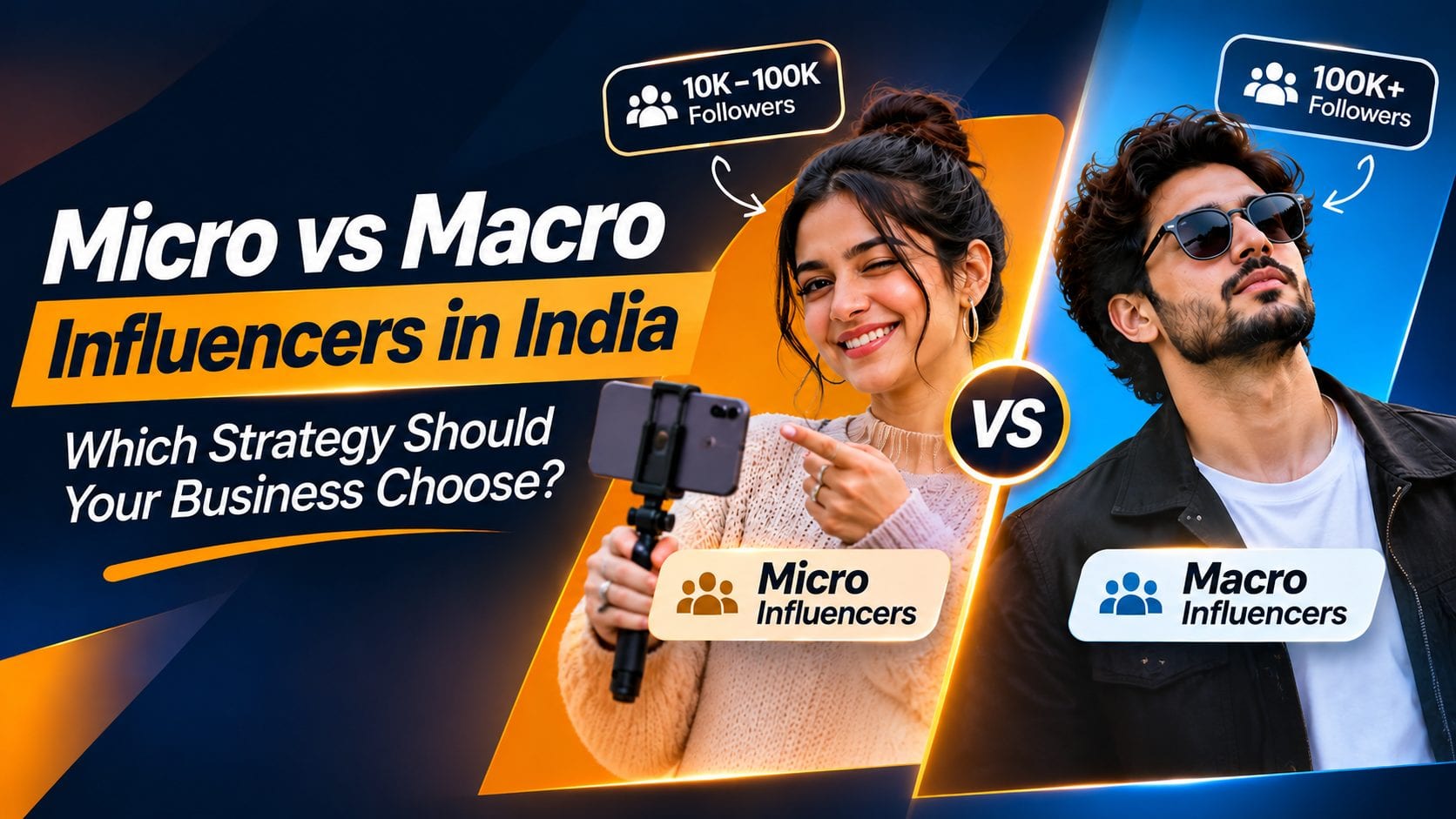
Micro vs Macro Influencers in India: Which Strategy Should Your Business Choose?
Introduction
Influencer marketing has become an important part of brand promotion in India. From small businesses to established companies, brands are collaborating with social media creators to reach potential customers, build trust and promote their products.
However, one common question businesses face is whether they should collaborate with micro-influencers or macro-influencers.
While both can help brands achieve marketing objectives, they differ in audience size, engagement, reach, campaign requirements and overall suitability.
Let's understand the difference between micro and macro influencers and how businesses can choose the right strategy.
-
What Are Micro-Influencers?
Micro-influencers are content creators who generally have a smaller but more focused social media following. They are often associated with specific niches such as fashion, fitness, beauty, skincare, technology and lifestyle.
Their audiences may share similar interests, making their content relevant to a particular community.
Key characteristics:
- Smaller, niche-focused audiences.
- Personal connections with followers.
- Content focused on specific interests.
- Opportunities for targeted brand promotion.
- Potentially higher engagement within relevant communities.
For example, a skincare creator who regularly shares product reviews and skincare routines can help a skincare brand connect with an audience interested in beauty and personal care.
-
What Are Macro-Influencers?
Macro-influencers are creators with significantly larger social media audiences and broader content visibility. They may be popular across multiple categories and have followers from different locations and backgrounds.
Brands often collaborate with macro-influencers when they want to increase visibility and introduce their products to a wider audience.
Key characteristics:
- Larger audience reach.
- Strong social media visibility.
- Broad content distribution.
- Greater potential for mass awareness.
- Opportunities for large-scale promotional campaigns.
For example, a fashion brand launching a new collection may collaborate with a popular fashion creator to introduce its products to a wider audience.
-
Micro vs Macro Influencers: Key Differences
The choice between micro and macro influencers depends on the brand's objectives and campaign requirements.
Here are the major differences:
Factors Micro-Influencers Macro-Influencers Audience Size Smaller, niche-focused Larger, broader Audience Type More specific interests Wider audience segments Engagement Can have strong niche engagement Varies by creator and audience Reach More targeted Broader potential reach Content Often personalised and niche-specific Often designed for wider visibility Campaign Objective Targeted engagement and niche awareness Mass awareness and visibility Neither category guarantees better campaign performance. The creator's audience quality, content relevance and brand compatibility matter more than follower count alone.
-
Which Influencer Strategy Should Your Business Choose?
The right choice depends on what your brand wants to achieve.
Choose Micro-Influencers When:
- Your target audience belongs to a specific niche.
- You want to promote products to a focused community.
- Your campaign requires detailed product experiences or reviews.
- You want to collaborate with multiple creators across different audience segments.
Choose Macro-Influencers When:
- Your objective is wider brand awareness.
- You are launching a product for a broader market.
- You want your campaign to reach a large social media audience.
- You need a creator with an established public presence.
The decision should always begin with your campaign objective rather than the influencer's follower count.
-
Can Brands Use Both Micro and Macro Influencers?
Absolutely! Brands do not always need to choose just one category.
A combination of micro and macro influencers can help businesses approach different stages of a campaign.
For example, a fashion brand launching a new collection could collaborate with a macro-influencer to generate wider visibility while working with micro-influencers to create niche-specific content and product experiences.
This approach allows brands to combine broader exposure with targeted audience communication.
However, the campaign should have a clear strategy, consistent messaging and measurable objectives.
-
What Should Brands Check Before Selecting an Influencer?
Regardless of the influencer category, businesses should evaluate a few important factors before finalising a collaboration:
- Audience authenticity: Check whether the followers appear genuine and relevant.
- Engagement quality: Evaluate meaningful comments, shares and interactions rather than relying only on likes.
- Audience demographics: Understand the audience's location, age group and interests.
- Content quality: Review the creator's previous posts, videos and brand collaborations.
- Brand compatibility: Ensure the creator's content style and public image align with your brand.
- Campaign objectives: Select creators based on the results you want to achieve.
A creator with a smaller but relevant audience may be more suitable for a particular campaign than someone with a much larger but unrelated following.
Conclusion
Micro and macro influencers both play an important role in India's influencer marketing ecosystem. While micro-influencers offer opportunities to connect with niche communities, macro-influencers can help brands achieve wider visibility.
The right strategy depends on your target audience, marketing objectives, campaign requirements and the creator's suitability for your brand.
Instead of choosing an influencer simply because of their follower count, focus on audience relevance, genuine engagement and content quality.
Ultimately, successful influencer marketing is not about choosing the biggest influencer. It is about choosing the right influencer for your brand.